
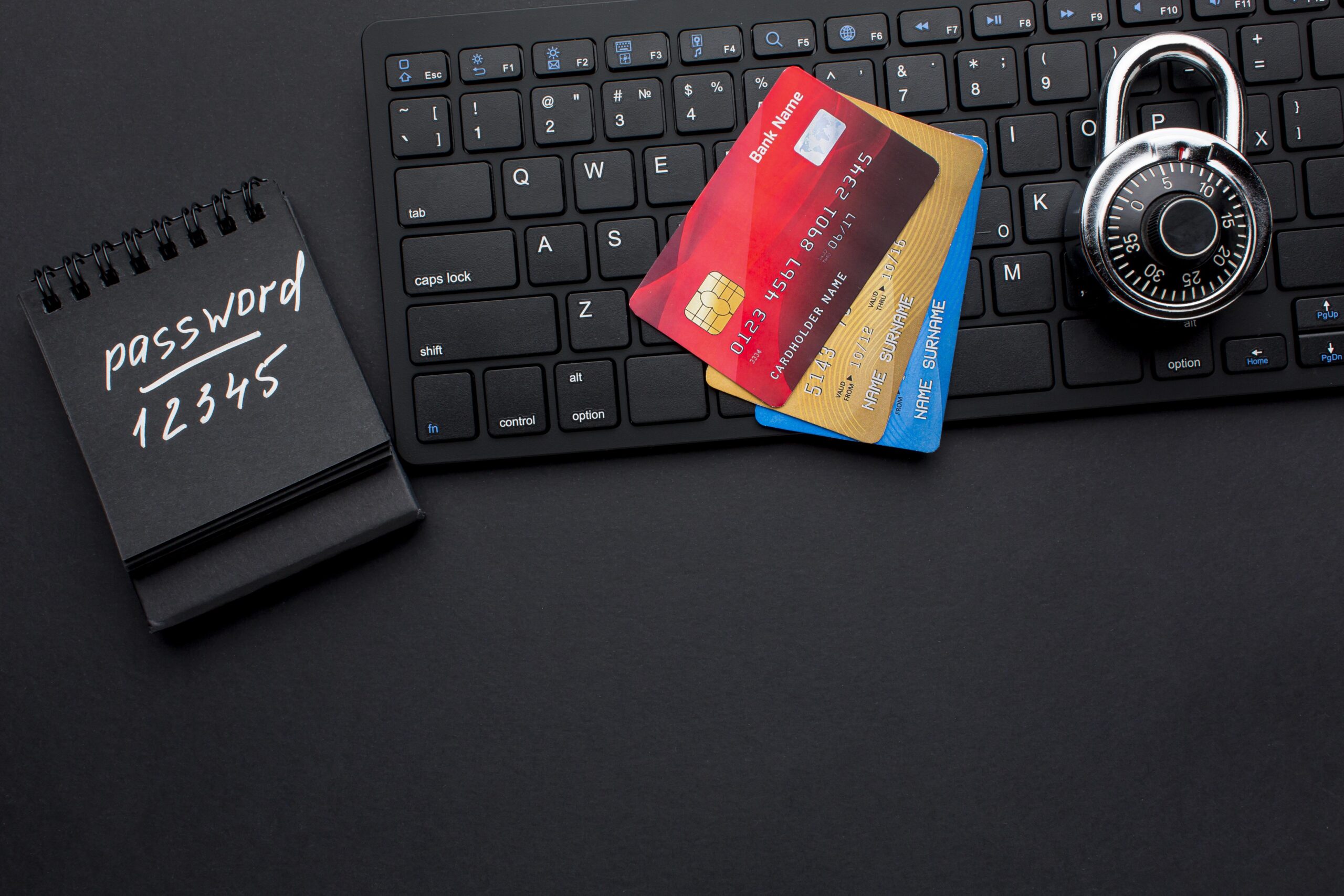
Digital payments have made online transactions faster and easier, but they have also created new opportunities for fraud. Phishing, stolen card details, account takeovers, fake payment pages, unauthorized transactions, and identity theft are now common concerns for consumers and businesses.
This is why users searching for quikconsole.com may naturally want to know whether the website provides fraud detection, payment monitoring, transaction protection, or other digital payment security features.
The first step, however, is separating verified information from claims circulating online.
Based on currently available information, quikconsole.com does not appear to be a verified digital payment platform or dedicated fraud-detection service. Recent independent reviews describe the domain primarily as a multi-topic content website covering areas such as technology, finance, health, lifestyle, travel, and related subjects. They report no publicly verifiable payment dashboard, transaction-monitoring system, downloadable security application, or documented payment-security infrastructure.
That distinction matters. A website can publish information about payment security without actually providing payment security services.
This article explains what can currently be established about quikconsole.com, what fraud-detection coverage would normally include, what security claims should be verified, and what users should check before trusting an unfamiliar website with financial information.
Quick Overview of quikconsole.com and Payment Security
Before discussing fraud detection, it is useful to understand what quikconsole.com appears to be.
Several 2026 reviews independently describe the website as a general-interest or technology-oriented blog rather than a functioning software platform. They report that visitors encounter articles and categories instead of a conventional software dashboard, payment console, or security product.
Some other websites have described quikconsole.com in much broader terms, including claims that it is an AI console, gaming management platform, productivity system, cloud service, or advanced technology dashboard.
The problem is that these descriptions do not consistently match the observable website.
What can be verified?
| Area | What current public information indicates |
|---|---|
| Website type | Primarily presented as a content/blog website |
| Technology content | Yes |
| Finance-related content | Reported |
| Digital payment information | May be discussed as a topic |
| Payment gateway | Not publicly verified |
| Fraud-detection engine | Not publicly verified |
| Transaction monitoring | Not publicly verified |
| Customer payment dashboard | Not publicly verified |
| Banking integration | Not publicly verified |
| Public security documentation | Not clearly verified |
| Dedicated payment-security product | Not verified |
This means readers should be careful about treating articles that describe quikconsole.com as an operational payment-security platform as established fact.
What Is Fraud Detection in Digital Payments?
Fraud detection is the process of identifying transactions or account activity that may be unauthorized, deceptive, or suspicious.
A real payment-security system normally examines multiple signals before deciding whether a transaction should be approved, rejected, reviewed, or challenged.
For example, a fraud-detection system might look at:
- Transaction amount
- Payment frequency
- Customer history
- Device information
- IP address
- Geographic location
- Login behavior
- Failed authentication attempts
- Card information
- Merchant information
- Unusual purchasing patterns
- Previous fraud reports
- Account changes
- Velocity of transactions
The objective is not simply to block every transaction that looks unusual.
A good fraud-detection system attempts to distinguish between a legitimate unusual transaction and an actually fraudulent transaction.
For example, imagine that someone normally spends ₹2,000 to ₹5,000 online but suddenly attempts a ₹100,000 purchase from another country.
That transaction deserves additional scrutiny.
However, it should not automatically be classified as fraud. The customer might be traveling, making a business purchase, or buying an expensive product for the first time.
This is why modern fraud detection generally combines rules, risk scoring, behavioral analysis, authentication, and sometimes machine-learning models.
Does quikconsole.com Provide Fraud Detection?
This is the most important question surrounding the topic.
At present, there is no strong publicly verifiable evidence that quikconsole.com operates a dedicated fraud-detection system for processing or monitoring digital payments.
Recent investigations describe the domain as a blog-style website rather than a payment platform. They report no publicly documented transaction dashboard, payment-processing system, software product, or verified security infrastructure associated with the domain.
Therefore, it would be misleading to claim that quikconsole.com:
- Detects fraudulent transactions
- Automatically blocks suspicious payments
- Provides real-time transaction monitoring
- Uses AI to score payment risk
- Protects card transactions
- Provides chargeback management
- Offers payment-tokenization services
- Connects directly to banks
- Provides PCI-certified payment processing
unless these capabilities can be independently verified from authoritative documentation.
Why this distinction is important
Search results can create the impression that a website offers a particular service simply because many articles describe it that way.
But search visibility is not proof of product functionality.
A genuine payment-security platform should normally provide evidence such as:
- Official product documentation
- Clearly identified company ownership
- Security documentation
- Privacy policy
- Terms of service
- Authentication procedures
- Technical documentation
- Supported payment methods
- Compliance information
- Customer or business support channels
Without this information, claims about advanced payment protection should be treated cautiously.
Digital Payment Security: What Users Should Expect
If a website claims to provide digital payment security, users should look beyond marketing terms.
Words such as “secure,” “protected,” “AI-powered,” “bank-grade,” or “military-grade” do not explain how a system actually protects money or financial information.
A credible payment-security service should be able to explain its security controls.
1. Encryption
Encryption protects information while it moves between systems.
For example, when a customer enters payment information on a legitimate secure website, communications should be protected using modern transport encryption.
Encryption is important, but it is only one part of security.
It does not automatically prevent:
- Phishing
- Account takeover
- Fake websites
- Stolen passwords
- Social engineering
- Fraudulent transactions
Therefore, encryption should never be presented as the entire fraud-prevention strategy.
2. Multi-Factor Authentication
Multi-factor authentication adds another verification step beyond a password.
Depending on the service, this could involve:
- Authentication applications
- Security keys
- One-time passwords
- Device confirmation
- Biometrics
MFA can significantly reduce the damage caused by stolen passwords because an attacker may still need another authentication factor.
For payment-related accounts, stronger authentication is particularly important.
3. Transaction Monitoring
A genuine fraud-monitoring system may analyze transactions continuously.
It can identify patterns such as:
- Multiple purchases within seconds
- Repeated failed transactions
- Sudden changes in spending behavior
- Transactions from unusual locations
- New devices accessing established accounts
- Unusual payment amounts
- Multiple accounts using the same suspicious signals
A risk engine can then assign a score to the activity.
For example:
| Transaction | Risk Indicators | Possible Action |
|---|---|---|
| Normal purchase from known device | Low | Approve |
| Slightly unusual purchase | Moderate | Additional verification |
| High-value transaction from unfamiliar device | High | Review or challenge |
| Multiple suspicious transactions | Very high | Block and investigate |
However, there is currently no publicly verified evidence that quikconsole.com itself operates such a transaction-monitoring system.
Behavioral Fraud Detection
Modern fraud prevention increasingly looks at behavior rather than relying only on static rules.
Behavioral analysis can examine how a person normally interacts with an account.
For example, a system may learn that a particular user usually:
- Logs in from the same region
- Uses a familiar device
- Shops at certain times
- Makes transactions within a particular price range
- Completes payments in a consistent way
A sudden change can increase the risk score.
This approach is useful because fraudsters may have stolen legitimate credentials.
The login credentials might be correct, but the behavior around the login may look abnormal.
Example
Suppose a customer normally:
Logs in from Delhi → uses the same phone → makes small purchases → pays through a familiar method.
Then suddenly:
New device → unusual location → several failed login attempts → password reset → high-value purchase.
A modern fraud system may treat the combination as suspicious.
This is much stronger than simply checking whether the password is correct.
Account Takeover Protection
Account takeover is another major digital-payment threat.
In an account takeover attack, criminals obtain access to an existing account and then use it for unauthorized activity.
Attackers may obtain credentials through:
- Phishing
- Password reuse
- Data breaches
- Malware
- Social engineering
- Fake customer-support messages
- Credential stuffing
Once inside the account, attackers may change:
- Passwords
- Email addresses
- Phone numbers
- Payment methods
- Delivery addresses
- Security settings
A genuine security platform should therefore monitor more than just payments.
It should also pay attention to suspicious changes surrounding the account.
Again, no public evidence currently establishes that quikconsole.com provides this kind of account-protection infrastructure.
Phishing and Fake Payment Pages
One of the simplest ways criminals steal payment information is through fake payment pages.
A fraudulent website can imitate:
- A bank
- A payment provider
- An online store
- A delivery company
- A government service
- A subscription service
The victim may enter their card number, password, OTP, or other information.
The criminal then uses the stolen information elsewhere.
This is why users should always check:
- The exact domain name
- HTTPS connection
- Website spelling
- Unexpected redirects
- Suspicious pop-ups
- Unusual payment requests
- Requests for passwords or OTPs
- Messages demanding immediate payment
The presence of HTTPS alone does not prove that a website is legitimate. A fraudulent website can also use HTTPS.
The identity and reputation of the website still matter.
Why Claims About quikconsole.com Need Careful Verification
The biggest issue surrounding quikconsole.com is not simply security.
It is information inconsistency.
Different websites have described the domain as different kinds of products.
Some sources describe it as a blog. Others have attached claims involving AI, productivity, gaming, cloud management, or technology tools. Multiple independent reviews have pointed out that these descriptions do not match the functionality they could verify on the website.
This creates an important lesson for digital-payment security:
Never trust a financial-security claim simply because several websites repeat it.
Repeated information can still be incorrect.
Claim vs. verification
| Common claim found online | Verification status |
|---|---|
| AI-powered payment protection | Not verified |
| Fraud detection | Not verified |
| Real-time payment monitoring | Not verified |
| Bank-level security | Not independently verified |
| Payment gateway | Not verified |
| Transaction risk scoring | Not verified |
| Gaming management | Not verified |
| Developer console | Not verified |
| General informational website | Consistently reported |
| Multi-topic content | Consistently reported |
This distinction makes the article more useful than simply repeating promotional claims.
How to Evaluate Digital Payment Security on Any Website
Whether you are researching quikconsole.com or another unfamiliar platform, use a practical verification process.
Step 1: Identify the actual service
Ask:
What exactly does the website provide?
Is it:
- A payment processor?
- A bank?
- A digital wallet?
- A financial-information website?
- A security product?
- A blog?
- A software application?
Do not assume that the word “console” means the website operates a technology console.
Step 2: Look for company information
A legitimate financial or security service should normally provide identifiable business information.
Look for:
- Company name
- Physical or registered address
- Support contact
- Privacy policy
- Terms of service
- Legal information
A lack of basic transparency should increase caution.
Step 3: Check for security documentation
A genuine security-focused company should be able to explain its controls.
Look for information about:
- Encryption
- Authentication
- Data storage
- Access controls
- Monitoring
- Incident response
- Payment security
- Compliance
If a website says it provides “advanced security” but does not explain what that means, the claim has limited value.
Step 4: Never Share Payment Details Just to Test a Website
This is particularly important.
Do not enter:
- Credit-card numbers
- Debit-card numbers
- Banking passwords
- OTPs
- CVV numbers
- Recovery codes
- Authentication codes
simply because you want to see whether a website’s payment functionality works.
If a platform has no clearly verified payment service, there is no good reason to provide sensitive financial information.
Step 5: Watch for Look-Alike Domains
Another issue reported around the quikconsole.com name is the existence of similar-looking domains and conflicting online descriptions.
A domain that differs by one character can belong to a completely different organization.
For example, criminals may rely on:
- Extra letters
- Missing letters
- Hyphens
- Different domain extensions
- Similar spellings
Always check the exact domain before entering sensitive information.
Digital Payment Security Checklist
Before trusting any website with payment-related information, use this checklist:
Website identity
- Is the exact domain correct?
- Is the company clearly identified?
- Is there a legitimate contact method?
- Is there a privacy policy?
- Are terms of service available?
Payment security
- Is the payment function clearly documented?
- Are accepted payment methods explained?
- Is authentication supported?
- Are suspicious transactions monitored?
- Is there information about fraud handling?
Trust
- Can the company be independently verified?
- Are product claims supported by documentation?
- Are security certifications clearly identified?
- Do independent sources confirm the same information?
Personal safety
- Do not share OTPs
- Do not reuse passwords
- Do not download unknown files
- Do not follow suspicious payment links
- Do not provide banking credentials
- Verify unexpected payment requests independently
What quikconsole.com Can and Cannot Currently Be Said to Provide
The clearest way to summarize the situation is to separate content coverage from security infrastructure.
quikconsole.com may discuss:
- Technology
- Finance
- Digital topics
- Online safety
- General informational subjects
Various independent reviews describe the domain as a multi-topic content website.
There is not enough public evidence to confirm that quikconsole.com provides:
- A payment gateway
- Fraud-detection software
- Real-time transaction monitoring
- Card-security infrastructure
- Digital-wallet protection
- Payment tokenization
- Bank integrations
- Automated fraud scoring
- Chargeback management
- Dedicated cybersecurity services
That does not automatically mean the website is malicious.
It means the claims should not be upgraded from “reported online” to “verified functionality” without stronger evidence.
Is quikconsole.com a Payment Security Platform?
Based on currently available evidence, the answer is no verified evidence supports describing quikconsole.com as a dedicated payment-security platform.
Recent reviews consistently report that the site behaves more like a content website than a software product.
Some reviews go further and question the transparency and legitimacy of the broader QuikConsole identity. Other sources are more cautious and say that the domain should be considered unverified rather than automatically labeled a scam.
That distinction is important.
Calling a website a confirmed scam requires evidence of fraudulent behavior or intent.
Saying that a website’s payment-security capabilities are unverified is a different and more defensible conclusion.
What Users Should Do Before Using quikconsole.com for Payments
If you encounter a page claiming that quikconsole.com provides payment services or fraud protection, do not rely on the claim alone.
Instead:
- Check whether the functionality actually exists on the domain.
- Look for official product documentation.
- Identify the legal company behind the service.
- Read the privacy and terms pages.
- Verify payment-security claims independently.
- Avoid entering financial information until the service is established.
- Be especially careful with links from third-party articles.
- Confirm that you are visiting the exact intended domain.
If the website asks for financial information but cannot clearly explain who operates the service and how the information is protected, stopping is the safer choice.
Why Good Fraud Detection Requires More Than a Security Badge

A security badge on a website is not a complete security strategy.
Real fraud prevention is usually a combination of technology, policies, monitoring, authentication, and human review.
A mature system can involve:
User authentication → Device intelligence → Transaction analysis → Risk scoring → Fraud rules → Additional verification → Decision → Monitoring
Each stage contributes to the overall security process.
For example:
Low-risk transaction
A known customer uses a familiar device and payment method to make a normal purchase.
Result: Transaction can proceed normally.
Medium-risk transaction
A known customer uses a new device and makes an unusually large purchase.
Result: Additional authentication may be requested.
High-risk transaction
An unfamiliar device attempts several high-value transactions after suspicious account changes.
Result: The transaction may be blocked or sent for investigation.
This layered approach is what users should expect from a genuine payment-security platform.
Final Verdict on Fraud Detection & Digital Payment Security Coverage on quikconsole.com
The phrase “Fraud Detection & Digital Payment Security Coverage on quikconsole.com” needs to be handled carefully because publicly available evidence does not establish quikconsole.com as a dedicated fraud-detection or digital-payment-security platform.
Current independent coverage generally identifies the domain as a content-oriented website rather than an operational payment or cybersecurity product.
There are many online descriptions attaching advanced capabilities to the QuikConsole name, but those descriptions are inconsistent. Some claim AI tools, gaming management, cloud functionality, productivity features, or security capabilities. These claims should not be treated as confirmed unless they can be demonstrated through official documentation or a verifiable product interface.
For anyone researching quikconsole.com, the safest conclusion is therefore:
Do not assume that quikconsole.com provides fraud detection or digital payment protection simply because third-party articles say that it does. Its payment-security capabilities are not currently publicly verified.
This does not, by itself, prove that the website is fraudulent.
It means users should distinguish between a website that publishes information about financial or technology subjects and a platform that actually processes, protects, or monitors financial transactions.
That distinction is especially important in digital payments because financial data is highly sensitive.
Before using any unfamiliar website for payments, always verify its identity, functionality, security documentation, privacy practices, and business ownership. If those details cannot be independently confirmed, avoid sharing payment credentials or other sensitive financial information.
Frequently Asked Questions
Is quikconsole.com a fraud-detection platform?
There is currently no strong public evidence verifying that quikconsole.com operates a dedicated fraud-detection platform. Independent reviews generally describe it as a content/blog website.
Does quikconsole.com provide digital payment security?
Its role as a dedicated payment-security provider is not publicly verified. Claims about payment protection should therefore be treated cautiously unless supported by official technical documentation.
Is quikconsole.com a payment gateway?
There is no reliable public evidence confirming that quikconsole.com operates a payment gateway or processes transactions as a financial service.
Should I enter my card details on quikconsole.com?
Unless you can independently verify a legitimate payment service, company identity, security controls, and the exact reason the information is required, it is safer not to enter card or banking information.
Is quikconsole.com a scam?
Available sources do not establish a definitive conclusion that the domain is a scam. However, several investigations question its identity, functionality, and transparency. The more accurate description is that its claimed software and security functionality is unverified.
Why are there so many different descriptions of quikconsole.com?
Different websites have published conflicting descriptions of the domain, with some presenting it as software while others identify it as a content website. Recent investigations suggest that repeated SEO-oriented coverage may have contributed to the confusion.
What is the most important digital-payment safety rule?
Never provide passwords, OTPs, CVV numbers, banking credentials, or other sensitive payment information to an unfamiliar service simply because a third-party article claims that the service is secure.
Conclusion
Digital payment security depends on verifiable technology, transparent ownership, strong authentication, transaction monitoring, fraud analysis, and responsible data handling.
The current evidence surrounding quikconsole.com does not establish that it provides these functions as a dedicated payment-security service. Instead, multiple recent sources describe the domain as a multi-topic content website and highlight a gap between online claims and publicly observable functionality.
For readers, the lesson is simple: do not confuse online claims with verified security features.
If quikconsole.com is being presented to you as a fraud-detection system, payment gateway, financial dashboard, or digital-payment protection service, verify that claim before trusting it with sensitive information.
In digital finance, caution is not unnecessary skepticism. It is basic security.

